2021年3月29日星期一

Does The Tent Leak When It Rains?

 Tents are natural, waterproof, treated canvas and they need to be completely sealed and waterproof. This is perfectly normal. Cotton canvas tents need to be weathered to make them waterproof; all canvas tents are the same. When the canvas is wet, the cotton fibers in the fabric contract (technically, the fibers expand, which causes the gaps between the braids to contract, a process known as contraction) and are tightly woven together, closing all the holes in the weave and making the canvas watertight.

The canvas tent needs to be weathered to be impermeable, and the seams need to be weathered to be impermeable. This is because a needle makes a bigger hole in the seam than a thread. The holes in the seams need to be expanded around the thread to seal the seams.
The canvas itself will be the first to weather, usually after the first two resoaks, and the seams will usually take longer.
Not only does the tent need to be fully soaked for the weathering process to be effective, but it also needs to be thoroughly dried (to remove the backbone) between soaks.
Although it is recommended that you test the tent before camping and spray and dry it a few times if possible, this is not necessary as the leakage is small (if any) and will not spoil your camping trip.
After that, your tent should keep you warm and dry for years, even on the heaviest rainy or snowy days.
Do not place any items on the inside surface of the tent as this will draw water away from the canvas surface and cause leaks.
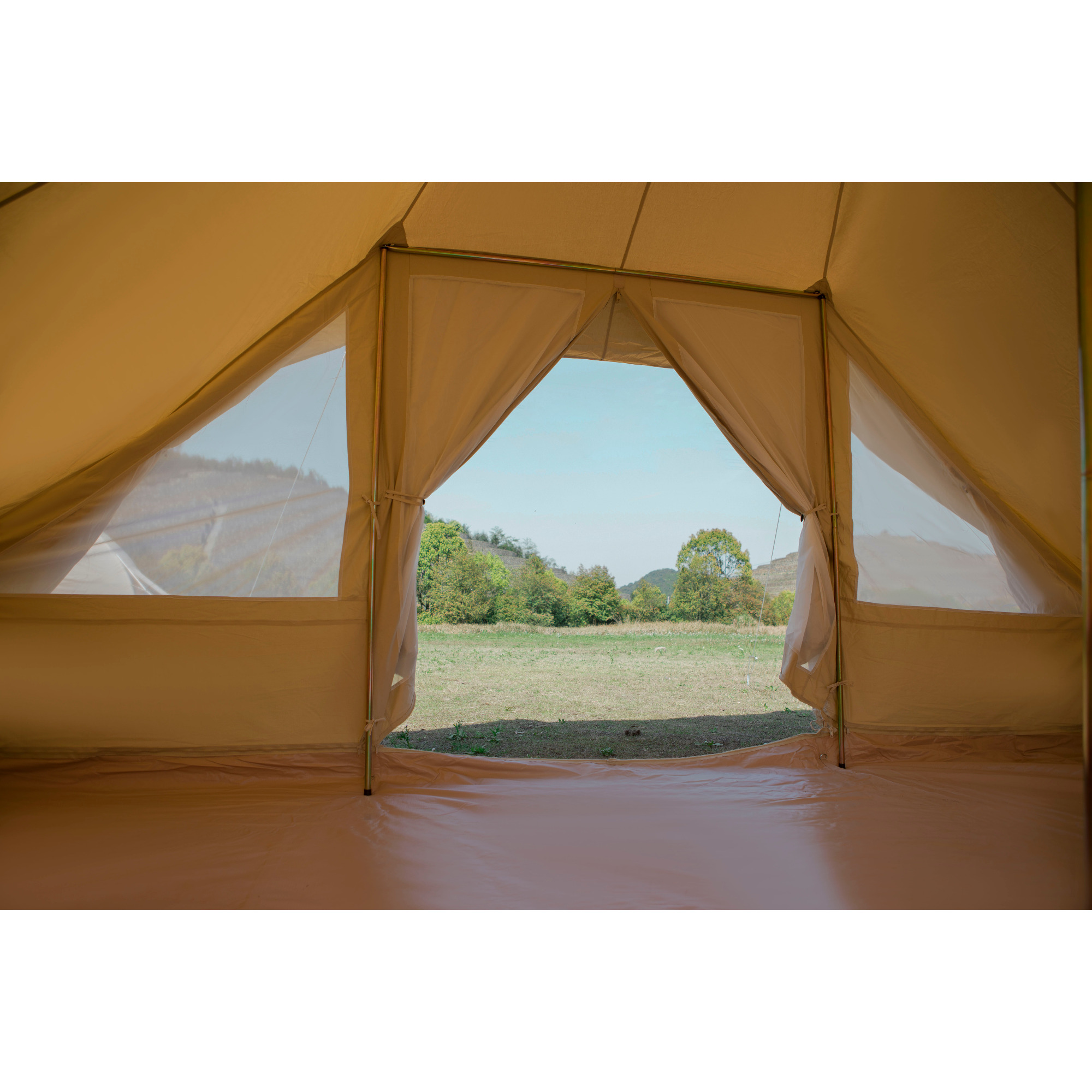
How to prevent leakage from tents

A good way to prevent leaks is to tidy up your tent when you buy it. The conditioning process, also known as weathering, involves setting up a tent in a garden and spraying it with hose water. Wetting the tent in this way helps sew the stitches together to expand and fill in any small gaps around the stitches. Some of the water may even seep in, just make sure the tent is completely dry before you put it away. It may seem like trouble, but this effort will help prevent tent leaks if you get caught in a storm on a camping trip.
Another good technique for preventing tent leaks is to keep all equipment away from the sides of the tent. This is one of the hard ways most campers learn. Anything pressed against the tent walls changes the high-temperature resistance of the tent fabric and causes it to subside under normal conditions.

How do you protect your tent when it rains

A good precaution against leaks in your tent if the weather is bad is to use tarpaulins. Tarpaulins or tarpaulins are tarpaulins. They can be made of canvas or waterproof polyester and must be large enough to completely cover the tent when extended. 
Unless you're camping in the woods and you can pull a tarp from a nearby branch, use a spare tent pole to set up a supporting frame. This can be tricky, so to save yourself a day of frustration, practice before you travel.
It is also a good idea to have the tarp protruding a few meters from the entrance to the tent. It will provide you with a dry space where you can free up wet clothes or wet boots to help keep the tent interior dry. If you are lucky enough to have a nice day, the tarpaulin room will have a cooking space for the children and even a playroom.

2021年3月20日星期六

Reasons Why Canvas Tents Are Better

 You've heard of canvas tents, and you may be wondering about them. Are they out of date? In the past, there really was no other tent to choose from! Tents made of nylon or other synthetic materials reduce weight, a priority for backpackers.

1.Sun protection

Canvas is a thicker material than the synthetic materials used in most tents today. As a result, less sunlight enters the tent interior.
While it is still important to choose as many shade camps as possible, canvas tents will provide more sun protection (if needed) than light synthetic tents.
Also, if you're a light sleeper, you'll easily wake up when it's light - canvas tents have the added advantage of being a thicker material and less exposed to the sun, so they can stay dark for longer!
The best canvas tents not only protect you from the sun but because they are made of harder fabrics, they last longer in daylight than thinner synthetic nylon/polyester tents.
Sunburn is one of the easiest ways to damage a tent. Once a synthetic nylon/polyethylene tent suffers serious daylight damage, you need to start investing in new tents. Canvas tents are designed to last longer and to protect against ultraviolet rays from the sun for longer.
Canvas tents are not invincible, of course, and nothing can withstand the sun forever, so it is still important to camp in as shady a place as possible.

2.Canvas tents keep cooler

One of the amazing things about modern houses is insulation. We take it for granted! But because of the insulation, our homes can stay cooler than the heat outside, or cooler than the cold outside.
Canvas tents are made of thicker, heavier materials. Sometimes they are made of cotton, and sometimes they are made of synthetic materials or a mixture of both.
In any case, breathable canvas tent can be much cooler inside than synthetic tents because they are thicker and therefore provide more sun protection. Now, any tent that is directly exposed to the sun will eventually heat up to the same temperature, but this could mean that you can use canvas tents for longer in the morning than synthetic tents.
Even if the air has a chance to heat up inside a canvas tent, it will always be cool and comfortable without the sun shining on you.

3.Canvas tents keep warm

Canvas tents are kept cool in the summer for the same reasons that they can stay warmer than they are outside. The heat from the inside prevents the tent from escaping, making canvas tents more comfortable than synthetic tents in cold weather.

4.Canvas tent longevity

As we have already mentioned, canvas tents are designed for longer camping periods.
                    
One of the main advantages of canvas tents is their durability. They are exposed to more sun, wind, and rain, and are much more resilient to human wear and tear on their homes.
Properly kept canvas tents (completely dry) can last for decades. The life of any tent of any material depends on its maintenance. However, canvas tents will last longer than thinner synthetic nylon/polyethylene tents simply because they have the properties of a thick fabric canvas tent.

5.Wind protection

Canvas tents provide excellent stability in strong wind conditions. It's still important to make sure you've pulled out the tent and picked the right spot, but your canvas tent won't swing or flap.
The durability and size of canvas tents make them ideal for securing furniture, beds, carpets, and other amenities commonly found in flat land.

2021年3月12日星期五

Camping In Winter, Watching the Heavy Snow Outside the Tent

 1/Snow camping, starry sky at night, silence in the mountains, and camp cooking are all sources of fun. At the same time, because winter camping is more difficult and serious than camping in other seasons, it is also a good exercise for mountain friends' climbing skills and experience.

2/ Winter is the off-season of the tourist season, and entrance fees and campsite fees will also be reduced. Moreover, the fees of some RV camping parks will also be reduced due to the decrease in passenger flow. In winter, there will be a lot fewer people, and you can easily enjoy the scenery.
3/ The weather is cold in winter, and many lakes and ponds will freeze. At this time, you can play on the ice. Many people also like to dig ice and fish; skiing in snowy places, playing snowmobiles, etc., can only be enjoyed in winter. Winter tents manufacturer introduces you to the things you should pay attention to during winter camping.
In addition to regular camping precautions, winter camping should also prepare:
1. Before setting up camp, use a sled or snowshoes to step on solid flat ground, so that you will not sink into the soft snow when you climb into the tent;
2. Remember to observe everywhere, in addition to the usual dangerous situations, also pay attention to the possibility of avalanches nearby, and whether the snow on the branches will be blown off by strong winds. Shrubs or boulders are ideal campsites (without the above dangers);
3. When setting up a camp, place the tent in a dry place. It is best to spread thick dry leaves. If the ignition is not dangerous, it is best to sweep an open area and light the torch to dry and heat the tent. Once the cold air enters the human body, it is not so easy to get rid of.
Camping equipment selection
1. Winter tents: It is best to use double-layer tents, that is, tents with two layers of inner and outer tents. It is best to carry a four-season tent, also known as a mountain tent, which not only provides good shelter but also has better warmth than the three-season tent.
2. Moisture-proof pad: The cold in winter does not only come from cold air, but half of it comes from underground. If you feel cold, it is recommended to use double moisture-proof pads. If foam pads + inflatable pads have a better effect.
3. Sleeping bag: The sleeping bag must be selected suitable for the ambient temperature. The temperature scale is an important reference. The sleeping bag is best to have a vertical lining structure, which can prevent the uneven distribution of down in the sleeping bag. Sleeping bags should not be placed directly on the ground. In winter, camping sleeping bags should not be placed directly on the cold ground. You can put some branches and outer clothing under the sleeping bag, or put some stones and some withered grass. They should be sufficiently fluffy before use so that the heat preservation effect is better. it is good.
Heating measures
1. Warm clothing: In winter camping, the dress is a very important thing. The classic three-layer dressing rule still applies. For the inner layer, select functional underwear; the middle layer and the warm layer bear the responsibility of maintaining body temperature; the outer layer and the shell layer bear the important responsibility of sheltering from wind and rain.
2. Maintain the temperature in the sleeping bag: Down sleeping bag is the best choice. A thick cotton sleeping bag and a fleece sleeping bag can also be substituted. If you feel cold before waking up in the morning or going to bed at night, you can do some exercises in the sleeping bag (lie on your back) Sit, squeeze buttocks, massage hands, and legs, etc.), and drink a hot drink. This can maintain body temperature. Do not wear too many clothes when you enter the sleeping bag. Wearing too much will make people sweat, which will make the sleeping bag damp and reduce thermal insulation performance.
3. Light a fire: camping in winter, many mountain friends will light a bonfire at night, not only for heating but also for fun. It is a pleasure to chat by the bonfire at night, barbecue, or drink hot tea. Be sure to pay attention to safety when using a bonfire. Keep away from flammable materials such as tents and sleeping bags. The bonfire should be extinguished when you go to bed at night. When leaving the camp the next day, you should pay more attention to putting out the fire completely.


2021年3月4日星期四

The easiest way to re-waterproof your bell tent

 Pitch your tent and make sure the tent is 100% dry.Remove dust and dirty with a hard brush.Use Bradproof waterproofing agent. 1 litre approximately covers 6m square.Apply the waterproofing agent with a paint roller. The cotton needs to be soaked properly.Let your tent dry in the wind, preferably not in the sun.


If the cotton canvas of your bell tent has been affected by mould, mildew or weather conditions, do as follows:
Moisten the cotton.Dissolve 1 unit of bleaching liquid into 10 units of water.Apply the solution to the wet canvas and let the canvas absorb it for about 30 minutes. Prolong the absorption time if necessary.Rinse the canvas with plenty of water.
Clean the canvas using Ultramar Shampoo, so there is no bleaching liquid left on the canvas.Let your tent dry properly.
 
Use Bradproof to protect the cotton against fungi, algae, filthy water, etc. A perfect waterproofing agent to make cotton tents waterproof is BRADPROOF. It is an environment-friendly product, non-toxic and biologically degradable. Tent rental places and army tents have used it with excellent result since 1943. The product is water based, without solvents or hydrocarbons. The usage varies between approximately 8 m² and 12 m² a litre. It is possible for a gray shine to appear on dark-coloured cotton after treatment; after a few downpours, however, this will disappear.  Some companies industrially impregnate cotton in case you don’t want to do it yourself. The cotton is first cleaned and then impregnated under high pressure. This, however, is quite expensive.

 We provide a wide range of canvas tents for family camping, like bell tents, safari tents, wall tent for glamping , military tents for army shelter and relief tents for hospital emergency, etc.

Made of high quality 100% cotton canvas in a variety of sizes and styles, our best seller bell tents give you the ability to choose the best tent to suit your specific environment, group size, and camping style.

Our website:www.glam-camp.com


How To Clean a Canvas Tent

The best way to explain the process (and there are a few of the finer points that people obviously disagree on) is to give the basic points ...